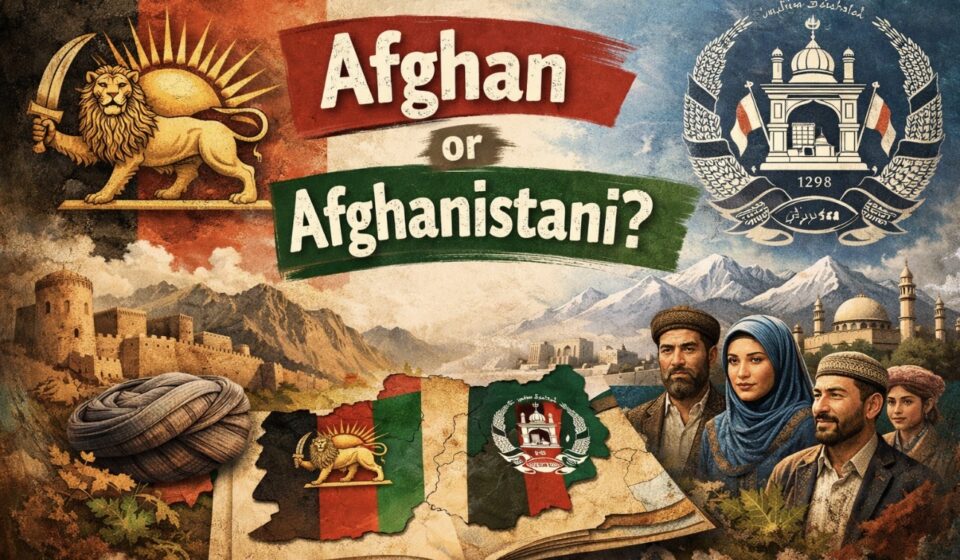
Afghan or Afghanistani? A Question About Identity
Sometimes a simple question can open a deeper discussion about identity.
Why do many people say “Afghan” when referring to everyone from Afghanistan, but rarely say “Afghanistani”?
For many people, this question is not only linguistic — it is also about history, identity, and how national identity is defined.
The country’s name is Afghanistan.
Logically, the nationality could also be Afghanistani — meaning simply a person from Afghanistan, just as we say Pakistani, Tajikistani, or Kazakhstani.
Historically, the word “Afghan” appeared in many older texts mainly in connection with Pashtun tribes. Over time, especially during the formation of the modern Afghan state in the 18th and 19th centuries, the term gradually expanded and began to be used more broadly.
As the country of Afghanistan developed as a political state, the word “Afghan” increasingly became a national label used for all citizens of the country, regardless of ethnicity.
However, Afghanistan is one of the most diverse societies in the region. Its people include many ethnic groups such as:
• Pashtuns
• Tajiks
• Hazaras
• Uzbeks
• Turkmen
• Nuristanis
• Baluch
• and many others
Because of this diversity, some people believe that the word “Afghanistani” reflects the country’s reality more clearly. It refers simply to nationality — a citizen of Afghanistan — without linking the identity to a specific ethnic background.
From this perspective:
• Afghanistan is the country
• Afghanistani could be understood as the nationality
• while Afghan historically had ethnic meanings that later expanded into a national label
Others, however, see “Afghan” as the official national identity today and use it without distinction.
This debate shows something important: identity is complex. It evolves through history, politics, language, and collective experience.
Afghanistan’s strength has always been its diversity. A country with many cultures, languages, and histories cannot always be described with a single simple word.
Perhaps the most important question is not which word people use — but whether all people feel respected and included in the national identity.
Understanding history helps us have better conversations about identity today.
And honest conversations are the beginning of understanding.
— Naweed Nabi